


Why Traditional Military Training No Longer Scales
Modern military forces are growing faster than traditional training systems can support. Instructor shortages, increasing mission complexity, resource constraints, and rapidly evolving technologies are creating a widening readiness gap across defence organizations. This article explores the structural limitations of conventional military training and explains why scalable, XR-enabled training environments are becoming essential for maintaining operational readiness, improving training accessibility, and preparing personnel for the demands of modern warfare.
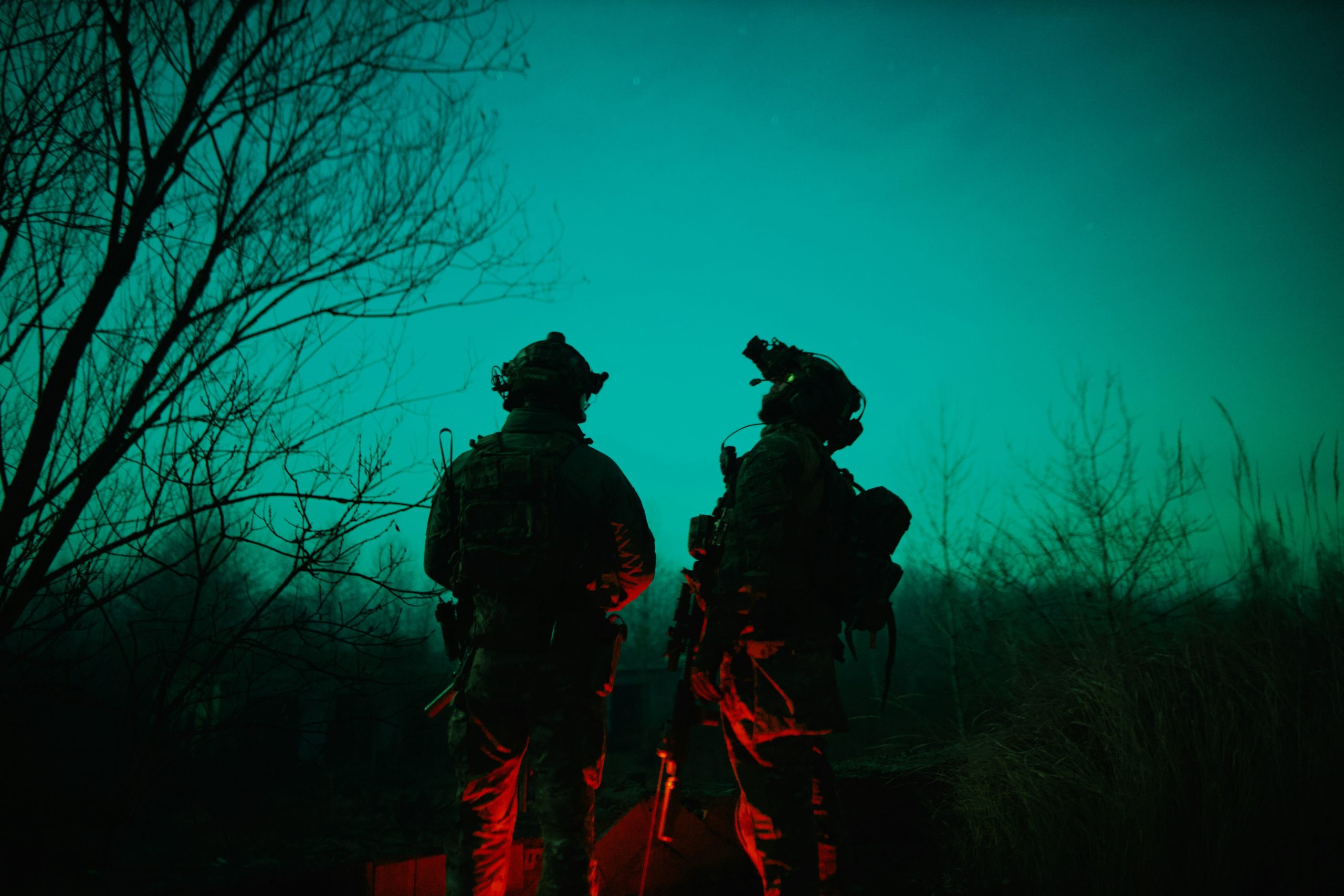
The structural limits behind today’s readiness gap
Modern military forces are scaling faster than traditional training systems were designed to support.
As missions become more complex, forces more distributed, and operational requirements more dynamic, legacy training models increasingly create bottlenecks that affect readiness, adaptability, and operational effectiveness.
The challenge is not a lack of commitment.
It is a structural mismatch between how modern forces must prepare and how traditional training systems are still organized.
For decades, military training has relied on centralized locations, physical equipment, instructor availability, live exercises, and fixed qualification cycles. These elements remain essential. But they are increasingly difficult to scale at the speed required by modern defence environments.
The result is a readiness gap that grows over time.
The instructor bottleneck
Instructor capacity remains one of the most significant constraints in military training.
Experienced personnel are limited, and their time is often consumed by repetitive foundational instruction. As force structures grow and new systems enter service, the ratio of instructors to trainees can become increasingly difficult to sustain.
This creates longer training pipelines, delays qualification cycles, and reduces the time available for advanced operational preparation.
In your current YouTrain positioning, this is already one of the core challenges: rapid force expansion creates instructor shortages, while repetitive basic training consumes valuable instructor time that could be used more effectively.
A scalable training model must therefore reduce repetitive instructor load without reducing training quality.
Rising complexity of systems and missions
Modern warfighting is multi-domain, technology-driven, and data-intensive.
Personnel must understand and operate increasingly complex systems, including drones, sensors, mission planning tools, communication platforms, vehicle systems, and AI-supported workflows.
The problem is not only that systems are becoming more advanced.
The problem is that they change faster than traditional training cycles can adapt.
Software updates, new interfaces, changing procedures, emerging threats, and multinational interoperability requirements create a continuous need for updated training environments.
Traditional training models struggle when content, scenarios, and procedures need to be updated quickly across multiple locations and user groups.
This is where training becomes not just an education challenge, but an operational readiness challenge.
Infrastructure and resource dependency
Live training depends on ranges, vehicles, equipment, ammunition, physical training areas, travel, safety procedures, and instructor coordination.
These resources are expensive, limited, and often heavily scheduled.
As a result, training frequency is constrained by availability rather than operational need. Large-scale or distributed training becomes especially difficult when multiple units, locations, languages, or partner organizations are involved.
Your own training concept already addresses this limitation directly: scalable XR training can reduce dependency on physical systems, location, weather, equipment availability, and instructor presence.
This does not remove the need for live training.
It improves what happens before live training begins.
Limited training throughput
Traditional training environments are often difficult to organize and limited to specific windows.
That creates a throughput problem.
If personnel can only train at certain locations, with certain instructors, on certain systems, and during certain scheduled periods, training capacity becomes structurally limited.
This affects:
- qualification speed
- repetition frequency
- knowledge retention
- confidence in mission-critical procedures
- standardization across units
- readiness consistency
In operational environments where requirements change continuously, periodic training alone is no longer enough.
Forces need the ability to train, refresh, and rehearse more frequently.
Distributed operations and multinational coordination
Modern forces rarely operate in isolation.
They operate across regions, commands, partner nations, languages, systems, and functional responsibilities. This increases the complexity of both operations and training.
A training model that works well in one location may not scale across several sites, nations, or operational contexts.
Distributed training must account for:
- different language requirements
- different equipment baselines
- different levels of prior knowledge
- different operational procedures
- different physical locations
- different instructor availability
This is especially relevant for NATO and allied defence environments, where interoperability and multinational coordination are no longer exceptional cases but central operating conditions.
Scalable readiness requires training systems that can standardize core learning while still adapting to local mission needs.
High operational costs
Traditional training costs often rise linearly with scale.
More personnel require more travel, more accommodation, more range time, more equipment use, more instructor hours, and more organizational coordination.
But higher cost does not automatically create better outcomes.
At scale, this creates a strategic problem: training becomes more expensive without necessarily becoming more frequent, more measurable, or more adaptable.
This is one of the strongest arguments for scalable training infrastructure.
The goal is not simply to reduce cost.
The goal is to increase training availability, standardization, and readiness while reducing unnecessary resource friction.
Cognitive and decision pressure
Modern operations require faster decisions under uncertainty, incomplete information, and high cognitive load.
Personnel must process information from multiple sources, coordinate across teams, respond to changing conditions, and act under pressure.
Traditional training environments often struggle to reproduce this cognitive complexity frequently and safely at scale.
This matters because readiness is not only about knowing a procedure.
It is about being able to apply that procedure under operational pressure.
Effective training must therefore prepare people not only for tasks, but also for uncertainty, stress, timing, coordination, and decision-making.
Slow adaptation cycles
Training content must now evolve faster.
New systems, updated procedures, changing mission profiles, emerging drone threats, sensor integration, battlefield data, and AI-supported tools all require training environments that can be updated rapidly.
In live environments, this is difficult.
Every change can require new planning, new materials, new instructor briefings, new equipment access, and new safety considerations.
When training adaptation is too slow, the gap between operational reality and training relevance grows.
In modern defence environments, outdated training is not just inefficient.
It can become a strategic vulnerability.
Risk in live environments
Certain scenarios are difficult to train frequently in the real world.
High-risk, hazardous, failure-intensive, or logistically complex scenarios often cannot be repeated at the required frequency without increasing risk to personnel, equipment, or infrastructure.
Examples include:
- system failures
- emergency procedures
- drone loss scenarios
- tactical driving under stress
- hazardous material handling
- mission planning under changing conditions
- coordination failures
- crisis response situations
These are exactly the scenarios where repetition matters most.
A scalable training model must make it possible to rehearse high-consequence situations more frequently and safely before live exposure.
The consequence: a readiness gap that grows over time
When training cannot scale, readiness becomes inconsistent, costly, and slow to adapt.
Units may deploy with different levels of preparation. Qualification timelines lengthen. Instructor capacity becomes overextended. Training content struggles to keep pace with operational change. Operational flexibility decreases.
The readiness gap does not appear overnight.
It grows gradually as missions become more complex, systems evolve faster, and training capacity remains bound to legacy structures.
This is why incremental improvement is not enough.
Modern defence organizations need a training model that can scale human capability as fast as operational requirements evolve.
Traditional Training vs. Scalable Readiness
Traditional Training
- Centralized and location-dependent
- Limited by instructor capacity
- Resource-intensive to organize
- Periodic rather than continuous
- Restricted by physical equipment availability
- Limited in scenario variation
- Slow to update and adapt
Scalable Readiness
- Distributed and accessible across locations
- Scalable through digital and XR-enabled infrastructure
- Designed to reduce repetitive instructor load
- Continuous and available on demand
- Compatible with evolving systems and workflows
- Capable of high scenario diversity
- Faster to update, standardize, and repeat
Strategic Outcome
- Higher readiness consistency
- Faster capability adaptation
- Reduced training friction
- Better use of instructor capacity
- More resilient force development
- Stronger operational preparation
A new training paradigm is becoming essential
The next evolution of military training is not about doing more of the same.
It is about rethinking how readiness is built, sustained, and scaled.
Real-world training remains essential. But it must be supported by training environments that prepare personnel earlier, standardize foundational knowledge, reduce avoidable bottlenecks, and allow mission-critical skills to be rehearsed continuously.
This is where XR-first training becomes strategically relevant.
Not as a replacement for live training.
But as a scalable readiness layer before, during, and after live training cycles.
At YouTrain, we believe operational capability must become continuously trainable.
Scalable readiness is not simply a technology shift.
It is a shift in how modern forces prepare people to operate, adapt, and decide under real operational pressure.
Future readiness will belong to organizations that can train human capability as fast as missions evolve.
- The structural limits behind today’s readiness gap
- The instructor bottleneck
- Rising complexity of systems and missions
- Infrastructure and resource dependency
- Limited training throughput
- Distributed operations and multinational coordination
- High operational costs
- Cognitive and decision pressure
- Slow adaptation cycles
- Risk in live environments
- The consequence: a readiness gap that grows over time
- Traditional Training vs. Scalable Readiness
- A new training paradigm is becoming essential
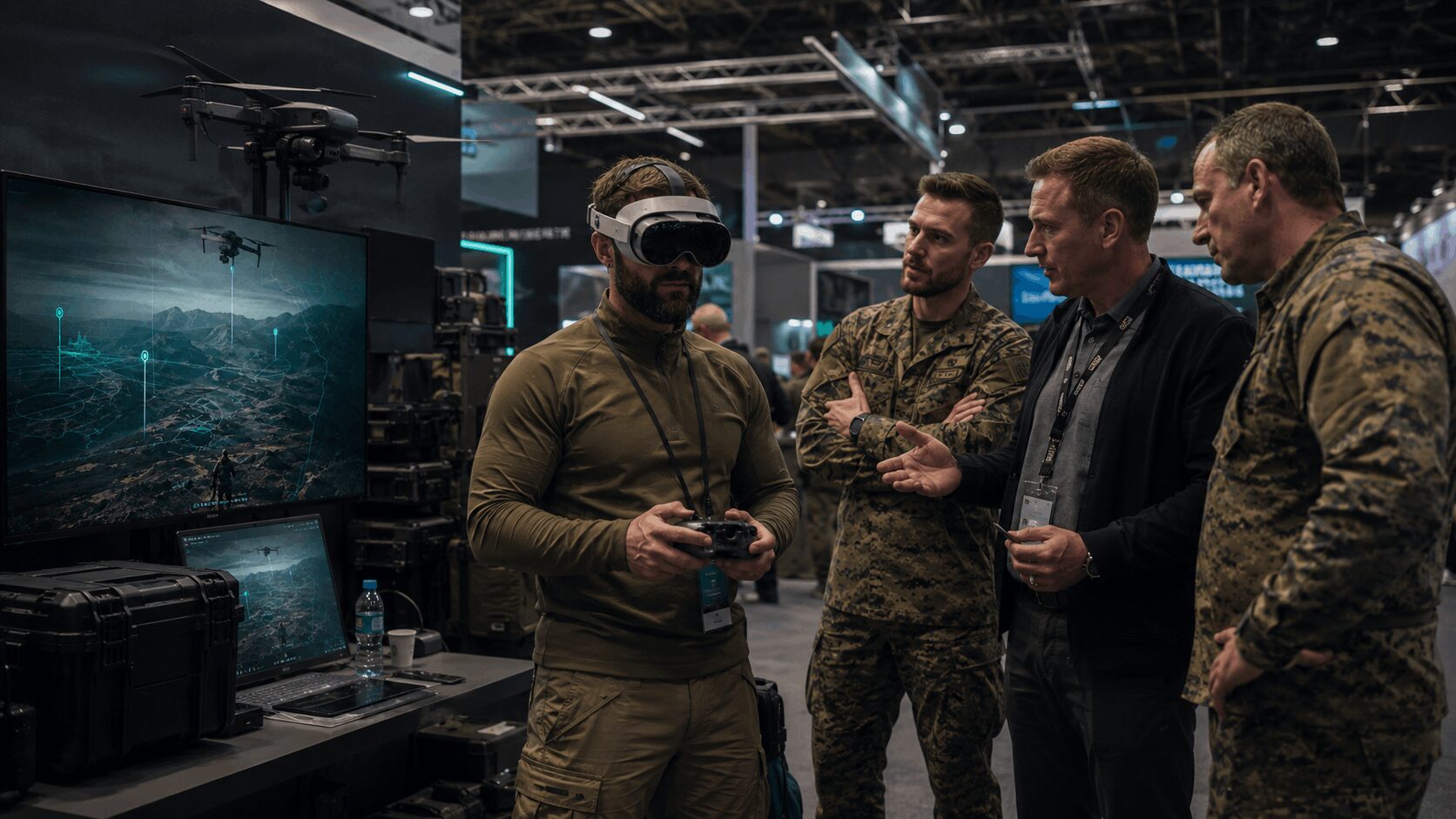
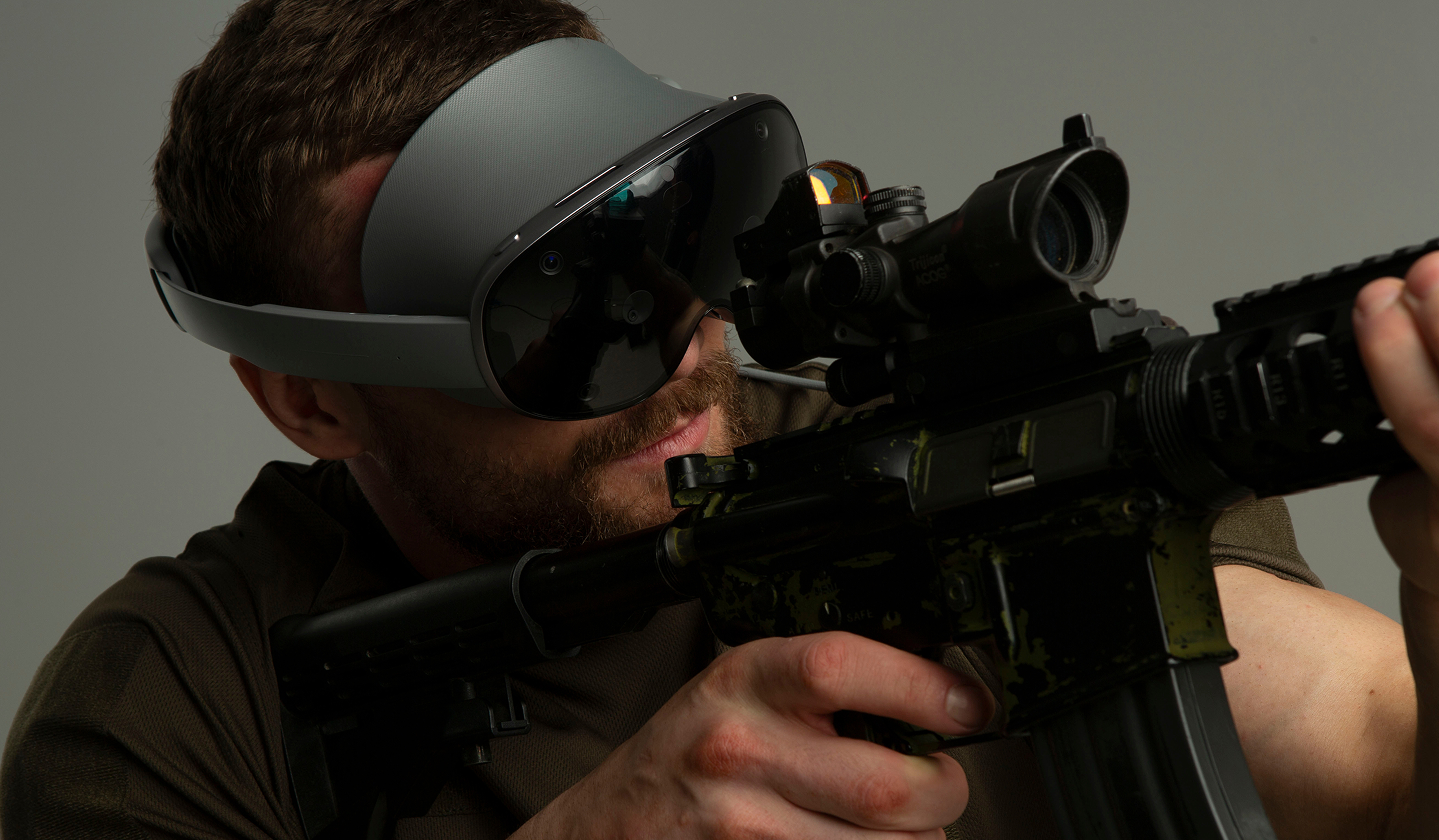
Whether you're exploring technology partnerships, training systems, or operational solutions — we'd love to connect.
Get in Touch